28 February, 2026 • 3 min read • By José Bolio
Reselling Your Riviera Maya Property: The Foreign Investor’s Legal Guide
Divesting Mexican real estate requires strict adherence to federal tax codes and civil frameworks. This guide outlines the mandatory legal processes for pre-construction assignments and traditional title transfers to ensure a secure, compliant exit.
The Context: A Dual-Track Resale Environment
Market dynamics and investment life cycles often necessitate the liquidation of real estate assets. For foreign investors in the Riviera Maya, the resale process dictates specific legal and fiscal protocols. The mechanisms available depend entirely on the current legal status of your property.
Investors typically encounter one of two scenarios: selling a contract before the project is completed, or selling a fully titled property. Executing either requires precise documentation to mitigate liability.
1. The Pre-Title Flip (Assignment of Rights)
Selling a pre-construction unit means you are not transferring real property. Instead, you are transferring your contractual position. This mechanism is legally defined as an Assignment of Rights (Cesión de Derechos). The new investor assumes your obligations and your right to final delivery.
To execute this legally, you must observe the following parameters:
- Audit the Promissory Contract: Review your original Contrato de Promesa. It dictates the assignment conditions, transfer fees, and restrictions.
- Secure Developer Authorization: An assignment generally requires explicit, written consent from the developer. Proceeding without this invalidates the transfer.
- Execute Formal Transfer: Both parties must sign a formal Contrato de Cesión de Derechos. For optimal legal security, this must be ratified before a Mexican Notary Public.
2. The Traditional Sale (Post-Title)
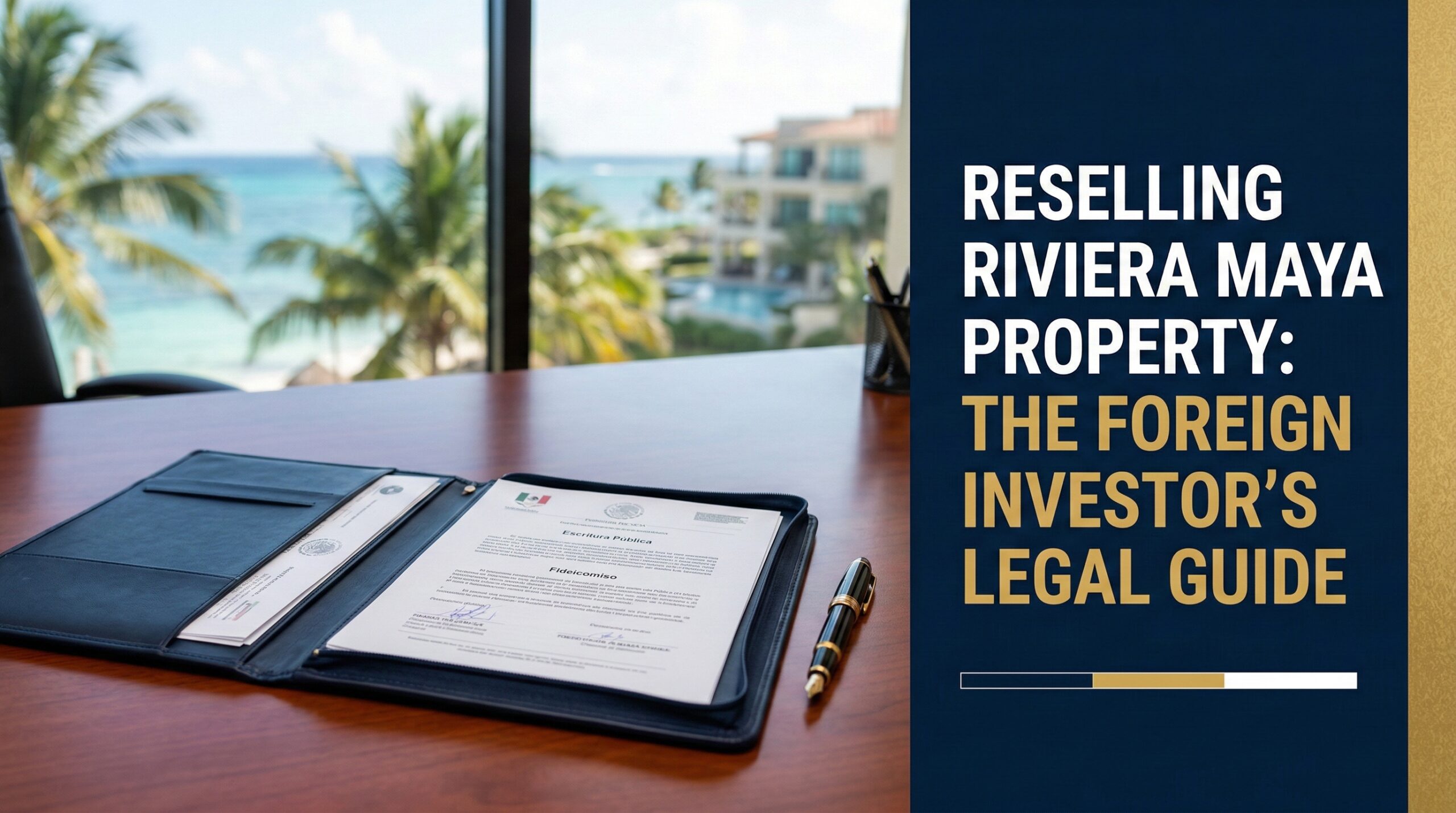
If you hold the physical title deed (Escritura Pública), the asset transfer follows traditional civil procedures. The transaction must be formalized by a certified Mexican Notary Public.
The Notary acts as the state’s impartial representative. They are responsible for legalizing the transfer, calculating tax liabilities, and withholding funds for the federal government. Sellers must provide an original deed, proof of current property taxes (Predial), utility clearances, and bank trust (Fideicomiso) documents.
Fiscal Obligations: Capital Gains Tax (ISR)
Liquidating real estate in Mexico triggers federal tax liabilities. The most critical is the Capital Gains Tax, known as Impuesto Sobre la Renta (ISR). The Notary Public will calculate this liability using two authorized methods and apply the lower fiscal burden.
- 25% of the Gross Sale Price: A flat calculation applied directly to the declared sale value. No deductions are permitted under this structure.
- 35% of the Net Profit: This method calculates tax solely on the profit margin. Permitted deductions include the inflation-adjusted original purchase price, formalized capital improvements (backed by valid facturas), acquisition taxes, and verifiable broker commissions.
Note: The primary residence tax exemption is heavily restricted. It requires formal, verified Mexican tax residency status. Non-resident foreign investors generally do not qualify for this exemption.
Strategic Dispute Resolution: Protecting Your Exit
At PeninsuLawyers, we recognize that real estate transactions are frequent catalysts for high-stakes disputes. A poorly structured Assignment of Rights can result in breach-of-contract litigation with developers. Similarly, improper documentation of construction upgrades can inflate your capital gains tax burden by thousands of dollars.
We engineer dispute-resistant exits. Our focus is on ensuring that your contracts are impenetrable and that developers honor their assignment clauses without imposing arbitrary penalties. A well-informed, legally guarded investor is immune to the common pitfalls of the Riviera Maya secondary market.
FAQ / Quick Guidance
- Does Anti-Money Laundering (AML) law apply to resales? Yes. Real estate transfers are classified as “Vulnerable Activities” under the LFPIORPI. The Notary must verify the identity of all parties and the origin of funds.
- Can I bypass the developer when assigning my rights? No. Attempting a shadow assignment breaches your original contract, jeopardizing your initial capital and exposing you to civil litigation.
- Are real estate commissions deductible from my ISR? Yes, provided the broker is legally registered in Mexico and issues a standardized electronic invoice (CFDI/Factura) for their services.
The Path Forward
Securing your investment returns requires uncompromising legal oversight. Do not leave your capital gains calculations or contract transfers to chance. Retain specialized counsel to audit your exit strategy before you list the asset.
Contact PeninsuLawyers to architect a secure, compliant, and optimized liquidation of your Riviera Maya property.

José Agustín Bolio Halloran
Licensed Mexican attorney specializing in consumer protection and real estate dispute resolution for foreign buyers. Over 13 years protecting property investments across the Yucatan Peninsula including Mérida, Playa del Carmen, Tulum, Cancún, and the Riviera Maya.
Protect your investment today
Whether you are buying property or fighting a developer dispute, get expert legal guidance from the Yucatan Peninsula number 1 foreign buyer advocates.